Robo Therapy
The Project
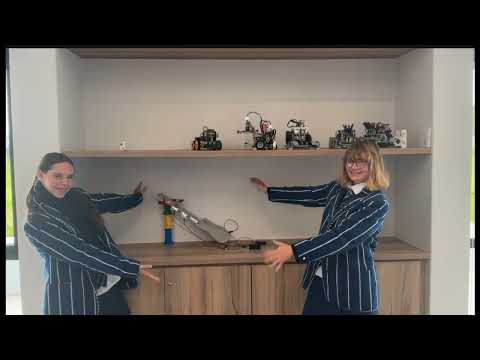
Robo Therapy is an affordable, AI-powered wearable exoskeleton designed to help individuals with upper-limb tremors caused by Parkinson’s disease, essential tremor, stroke recovery, injury rehabilitation, and age-related motor decline. The device fits along the wrist, forearm, and elbow, using real-time motion sensors to detect involuntary tremors. It then delivers adaptive vibration feedback to stabilize the arm without interfering with voluntary movement. The system connects wirelessly to a smartwatch for progress tracking and supports voice commands, allowing users to perform daily tasks like eating, writing, and dressing independently. It combines mechanical support, smart sensing, and connected health technology into one affordable, at-home rehabilitation solution. The team was inspired by witnessing how upper-limb tremors affect the independence, confidence, and dignity of older adults — especially family members and individuals in their community living with Parkinson’s disease. They saw that many people gradually stop eating in public, avoid writing, and struggle with simple tasks like putting on a shirt. Existing solutions were either too expensive, required frequent clinic visits, or only reduced shaking without helping long-term recovery. The team wanted to create a solution that restores not just movement, but also the ability to live independently at home. One of the biggest challenges was balancing comfort with functionality. The early 3D-printed prototype successfully detected tremors and delivered vibration feedback, but it was too heavy for extended daily use. Redesigning the exoskeleton with lighter materials while keeping it strong and responsive took multiple iterations. Another difficulty was making the system adaptive to different tremor patterns — each user’s movement is unique, and training the AI to respond accurately without blocking voluntary motion required extensive testing. Additionally, integrating smartwatch connectivity while keeping the total device affordable (target $1,000) pushed the team to make careful trade-offs between features and production costs.

About the team
Team members
More cool Hardware projects
AquaGuard
Hardware
Neo Sentinel X
Hardware

Nimbus Guitar 2000
Hardware